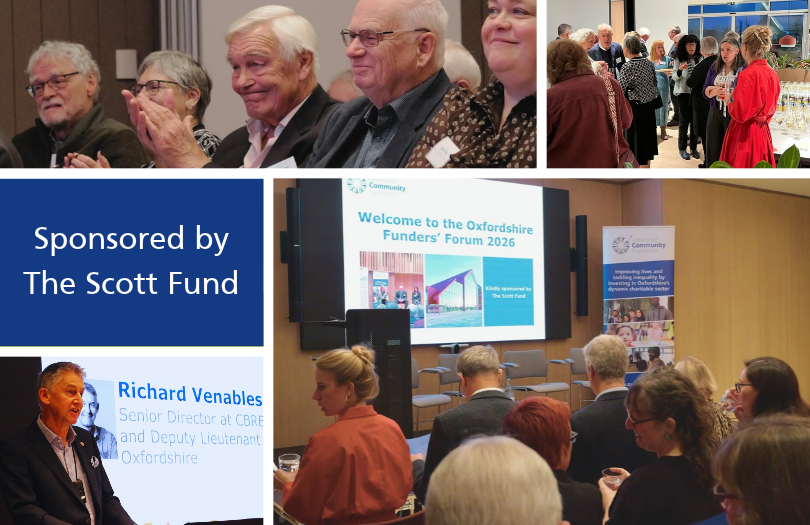
Nearly 90 leaders from philanthropy, business, science, local government, higher education and the voluntary sector came together at The Red Hall, Oxford North, for Oxfordshire Community Foundation’s eighth annual Funders’ Forum.
The event focused on a question that will shape Oxfordshire’s future: as the county enters a period of significant growth and investment, how can more people and communities benefit from the opportunities that lie ahead?
Launching the latest Oxfordshire Uncovered report
The forum marked the launch of the third edition of Oxfordshire Uncovered, OCF’s flagship report on local need. Drawing on the latest data and insight, the report highlights the different experiences of people living across Oxfordshire. While the county is internationally recognised for its economic success, world-leading research institutions and quality of life, many communities continue to face barriers that limit their ability to participate fully in that prosperity.
Welcoming guests, OCF’s Chief Executive Zoe Sprigings reflected on the importance of bringing together people who are helping to shape Oxfordshire’s future. Attendees included senior representatives from local authorities, businesses, universities, grant-makers and charitable organisations, creating an opportunity for discussion about how the county can ensure growth is both inclusive and sustainable.
Growth and prosperity must go hand in hand
Keynote speaker Richard Venables DL, Senior Director at CBRE and Deputy Lieutenant of Oxfordshire, spoke about the scale of growth Oxfordshire is expected to experience over the coming decades. With major investment planned across science, technology, energy, housing and infrastructure, he described the county as one of the most dynamic places in the UK.
At the same time, Richard argued that long-term success depends on ensuring that more people can benefit from, and contribute to, that growth. Drawing on themes explored in Oxfordshire Uncovered, he spoke about the need to tackle barriers that prevent some communities from sharing in the opportunities being created.
He described thriving communities as an essential part of Oxfordshire’s future prosperity. When people have access to good health, education, skills and support, they are better able to participate in the workforce and contribute to local businesses and institutions. Investment in communities, he said, should therefore be seen not only as a social responsibility, but as a vital ingredient in Oxfordshire’s continued economic success.
As Richard noted, “economic well-being is intrinsically linked to social and cultural well-being in an area”.
The event also provided one of the first opportunities for attendees to explore the findings of Oxfordshire Uncovered ahead of its public launch, prompting discussion about how funders, businesses and civic leaders can respond to the challenges and opportunities identified in the report.
What does great community investment look like?
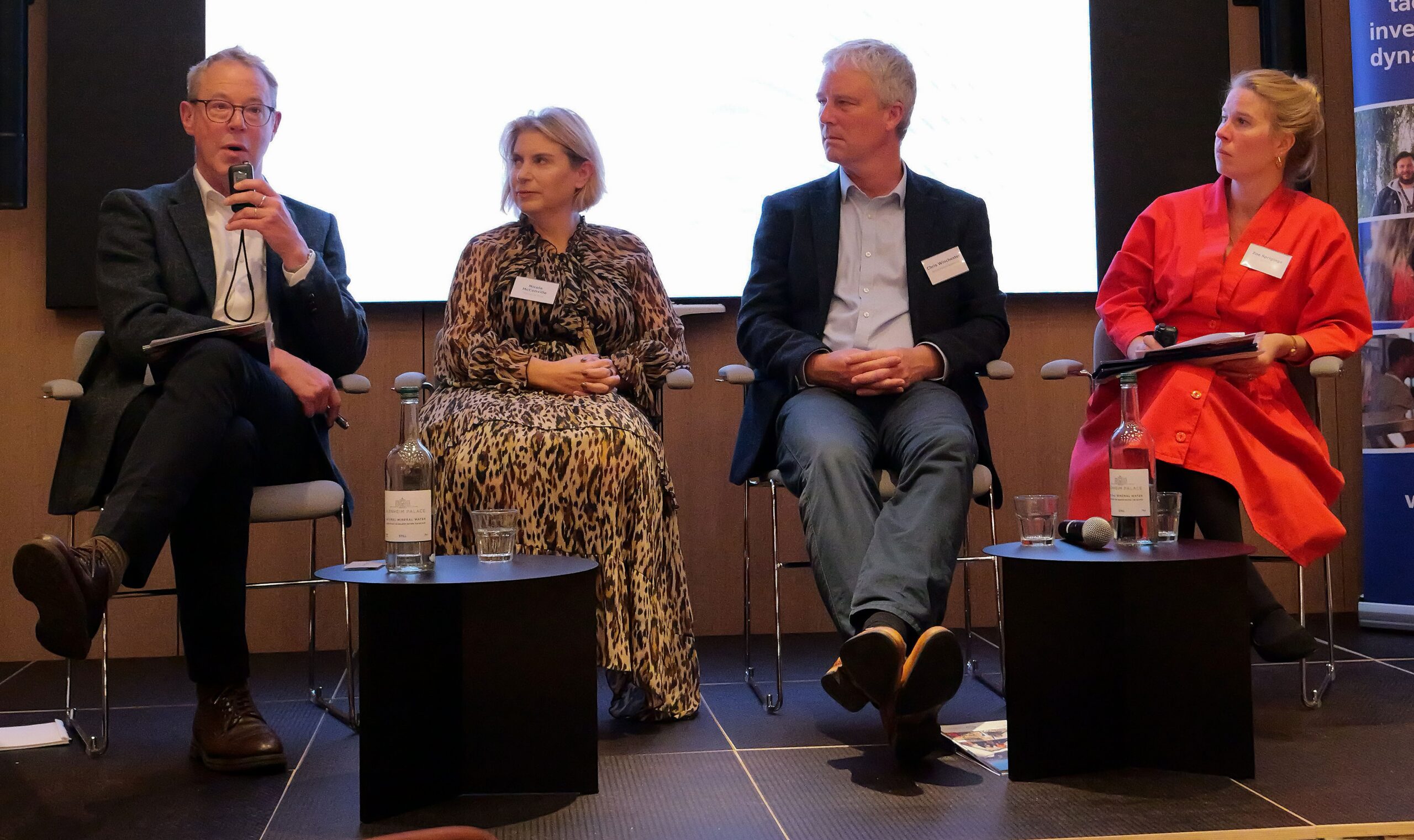
Following the report launch, a panel discussion explored what effective community investment looks like in practice, and how organisations can work together to support thriving communities during a period of rapid change.
The panel featured Chris Winchester, Head of Scientific Affairs at Oxford PharmaGenesis; Nicola McConville, Partner at Mishcon de Reya; and Ben Cairns OBE, Chief Executive of the Institute for Voluntary Action Research (IVAR). Drawing on perspectives from philanthropy, business and professional services, the panel discussed collaboration, pooled approaches to funding, trust-based philanthropy and the importance of investing for long-term impact.
Nicola McConville highlighted the different ways individuals and businesses can support charitable causes, from sharing expertise and mentoring to making assets and facilities available for community use. She also discussed the emergence of venture philanthropy approaches, which combine financial support with hands-on involvement and expertise.
 Building trust between funders and communities
During the discussion, OCF also highlighted its recent adoption of IVAR’s Open and Trusting grant-making commitment. The initiative encourages funders to build stronger relationships with charities through flexibility, transparency and trust, enabling them to focus more of their time and resources on the communities they serve.
Speaking on the panel, Ben Cairns reflected on the importance of strong relationships between funders and community organisations, recognising the expertise, insight and lived experience that already exists within local communities. He noted: “I think the community foundation movement is an incredibly powerful vehicle, and is perfectly positioned to capitalise on both the agenda of central government, but also the desire of business to give back. The way in which the community foundation does this is incredibly attuned to the human experience. So we’ve got a lot to commend it for, and I think we should use community foundations as a vehicle for giving, rather than proliferate more vehicles.”
The role of business in strengthening communities
Chris Winchester discussed the role businesses can play in supporting stronger communities and highlighted Oxford PharmaGenesis’ recently established £250,000 donor-advised fund with OCF. The fund creates a long-term vehicle for charitable giving across Oxfordshire and reflects the company’s commitment to investing in the communities that underpin the county’s success.
Reflecting on Oxford PharmaGenesis’ approach, Chris described charitable giving as “an extension of our everyday work”, highlighting the importance of seeing community investment as part of the way successful businesses operate.
The discussion was then opened up to the audience, giving attendees the opportunity to share their own perspectives and put questions to the panel about Oxfordshire’s future.
Questions explored how founders and entrepreneurs can be encouraged to think about philanthropy and legacy, how funders can work together to tackle interconnected challenges, and how philanthropy can respond as public-sector funding continues to come under pressure. Discussion also focused on the role of risk in grant-making, and the importance of supporting long-term solutions to complex social challenges.
Looking ahead
The event concluded with a networking reception, sponsored by The Scott Fund, which is held and managed by OCF on behalf of Finlay and Sally Scott, providing an opportunity for delegates to continue conversations and build new connections.
Zoe concluded the event by commenting: “There is such a fine line that we have trodden today between spotlighting the needs, and sharing the stories of hope, the possibility. We’re not looking at a society in Oxfordshire where no-one wants to help or where no organisations are ready to respond. It is absolutely the opposite – so that makes me extremely optimistic about tackling those issues, and OCF’s role in that.”
If you share this optimism and would like to continue the conversation about community investment, philanthropy or partnership working, we’d love to hear from you. Please contact kate.parrinder@oxfordshire.org to find out more.